Lifestyle

For decades, luxury homes were often defined by scale.
More square footage. Larger entry halls. Bigger pools. More bedrooms. More visible displays of wealth.
But at the highest end of the real estate market, the definition of luxury is changing.
Today’s ultra-high-net-worth homebuyers are increasingly spending on features that improve how a home feels, functions and supports their lifestyle rather than simply how impressive it looks.
Wellness suites are replacing ordinary home gyms. Kitchens are being supported by hidden prep kitchens and catering spaces. Outdoor areas increasingly resemble private resorts. Security systems are becoming more sophisticated and discreet. And smart-home technology is expected to disappear into the architecture rather than dominate it.
That shift reflects a broader change in luxury real estate.
Sotheby’s International Realty’s 2026 Mid-Year Luxury Outlook identified longevity as one of the defining forces shaping high-end housing, with wellness infrastructure and health-centered design becoming increasingly influential in purchase decisions. The same report found that 62% of surveyed luxury real estate professionals said lifestyle was becoming a more important factor for buyers.
Luxury today is becoming less about having more—and increasingly about making everyday life exceptional.
Here are the home features the ultra-wealthy are spending big on now.
1. Private Wellness Suites
Perhaps no trend better demonstrates the evolution of luxury real estate than the rise of the private wellness suite.
A traditional home gym is no longer necessarily enough.
At the highest end of the market, homeowners are creating dedicated wellness environments incorporating features such as:
Saunas
Steam rooms
Cold plunges
Massage rooms
Pilates and yoga studios
Meditation spaces
Treatment rooms
Hydrotherapy
Advanced air filtration
Whole-home water filtration
In some cases, these spaces resemble the wellness facilities found at five-star resorts rather than residential gyms.
The trend goes beyond fitness.
Luxury buyers are increasingly thinking about their homes through the lens of longevity—creating environments designed to support health, recovery and quality of life for decades.
Sotheby’s reported that wellness real estate has more than doubled in size over the past five years and is projected to exceed $1.1 trillion globally by 2029. Nearly 38% of real estate professionals working with $10 million-plus properties also reported that aging in place has become a growing consideration among buyers.
The result is a new category of luxury home: one that functions partly as a private wellness retreat.
2. Resort-Style Outdoor Living
The backyard has become one of the most valuable rooms in the house.
At exceptional luxury properties, outdoor spaces are increasingly designed with the same level of detail as interiors.
Infinity pools remain desirable, but buyers are looking beyond the swimming pool itself.
High-end estates may now include:
Covered outdoor living rooms
Full outdoor kitchens
Pool houses
Fire features
Outdoor bars
Dining pavilions
Cold plunges and spas
Cabanas
Expansive landscaping
Sports courts
Private gardens
The goal is no longer simply to create an attractive yard.
It is to create a private resort.
In markets such as Miami, Palm Beach, Los Angeles, Scottsdale and other warm-weather luxury destinations, seamless indoor-outdoor living can become one of a property's defining characteristics.
Large retractable glass walls, shaded terraces and carefully designed landscaping increasingly blur the boundary between the interior and exterior of the home.
3. Cold Plunges, Saunas and Recovery Spaces
Cold plunges have moved rapidly from elite athletic facilities into luxury residences.
They are increasingly being incorporated alongside saunas, steam rooms and swimming pools to create dedicated recovery circuits within the home.
The growing popularity reflects a broader cultural shift toward wellness and performance.
Rather than simply installing a fitness room filled with equipment, affluent homeowners are spending on spaces designed around the entire recovery experience.
Some luxury wellness areas now resemble private spas, complete with treatment rooms, relaxation lounges and direct connections to gardens or outdoor pools.
Homes have increasingly become places where owners can train, recover and recharge without ever leaving the property.
4. Serious Home Fitness Facilities
The era of placing a treadmill in a spare bedroom is disappearing at the top of the market.
Today's luxury home gyms can rival private fitness clubs.
Buyers are looking for generous ceiling heights, commercial-quality equipment, specialized flooring, mirrors, natural light and enough space for personal trainers or multiple forms of exercise.
But some homeowners are taking recreation even further.
Golf simulators, pickleball courts and other at-home sports facilities have become increasingly visible in high-end listings. Veranda, citing Zillow data, reported that listings mentioning golf simulators and pickleball courts had each increased approximately 25%.
Depending on the property, buyers may also encounter:
Indoor basketball courts
Tennis courts
Putting greens
Padel courts
Climbing walls
Bowling alleys
Batting cages
For affluent homeowners, recreation is becoming integrated into the architecture of the home itself.
5. Invisible Smart-Home Technology
Technology has become expected in luxury homes—but the way it is incorporated has changed.
The most sophisticated smart homes don't necessarily look technological.
Lighting, climate, shading, entertainment, security, pools and access systems can all operate through centralized platforms while remaining largely invisible.
The objective is simplicity.
With a single command, homeowners may be able to lower shades, adjust lighting, change room temperatures, activate entertainment systems and secure the property.
Advanced homes can also automate these functions throughout the day.
The best systems are increasingly designed to work quietly in the background.
For high-net-worth homeowners, the ultimate smart home isn't the one with the most screens.
It's the one that requires the least effort.
6. Sophisticated Security and Privacy
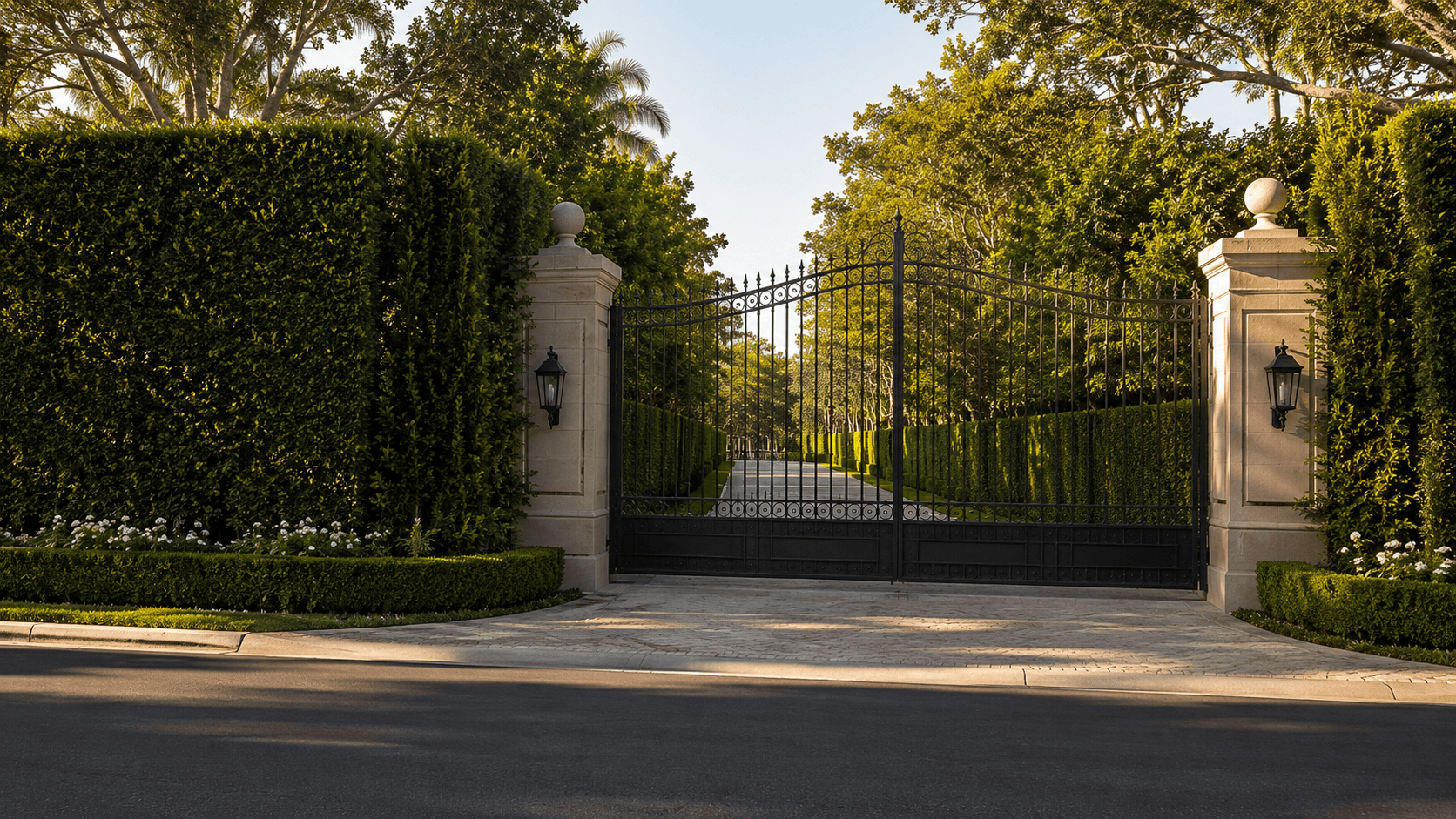
For ultra-high-net-worth buyers, privacy has become one of the most valuable luxury amenities.
That demand is influencing both where wealthy buyers purchase homes and how those properties are designed.
At the highest level, residential security can include:
Gated entrances
Perimeter detection
Advanced camera networks
Biometric access
License-plate recognition
Reinforced safe rooms
Secure package areas
Separate security quarters
Backup communications
Independent power systems
Some sophisticated systems are designed to identify unusual activity around the property before someone ever reaches the residence.
The Wall Street Journal reported in 2026 that ultrawealthy homeowners are investing more heavily in residential security, highlighting one Scottsdale home equipped with dozens of AI-enabled cameras, perimeter detection and a reinforced safe room.
What makes these systems particularly luxurious is that much of the technology can remain virtually invisible.
Security is strongest when residents feel protected without feeling as though they are living inside a fortress.
7. The Show Kitchen—and the Kitchen You Never See
The luxury kitchen is evolving into two kitchens.
The primary kitchen remains a centerpiece of the home, often featuring statement stone, custom cabinetry, oversized islands and professional-grade appliances.
But increasingly, a second space sits behind it.
Often called a prep kitchen, catering kitchen or scullery, this hidden workspace allows cooking, cleanup and food preparation to happen away from the main entertaining areas.
For homeowners who regularly entertain—or employ household staff—the arrangement offers a significant advantage.
The primary kitchen remains pristine while the practical work happens behind the scenes.
Luxury, in this case, isn't necessarily having a larger kitchen.
It's never having to see the mess.
8. Entertaining Spaces That Rival Private Clubs
For many ultra-wealthy homeowners, entertaining remains central to how a residence is designed.
But formal dining rooms and oversized ballrooms are no longer the only expressions of this lifestyle.
Today's luxury entertaining spaces can include:
Temperature-controlled wine rooms
Tasting rooms
Cocktail bars
Private cinemas
Listening rooms
Game rooms
Entertainment lounges
Cigar rooms
Catering kitchens
Outdoor dining pavilions
Wine storage in particular has evolved from a utility space into a major architectural feature.
Collectors increasingly want illuminated wine walls and tasting rooms that allow the collection itself to become part of the home's interior design.
9. Private Car Galleries
For serious collectors, the garage is becoming a gallery.
High-end properties are increasingly being designed around automobiles rather than simply providing parking for them.
These spaces can include:
Climate-controlled garages
Glass display walls
Vehicle turntables
Car lifts
Charging infrastructure
Detailing stations
Dedicated lounges
Collector lighting
In some extraordinary residences, homeowners can see their automobiles from interior living spaces.
For buyers with collections of Ferraris, Porsches, Aston Martins or rare vintage cars, the garage becomes another curated room of the house.
It is no longer a place to hide the cars.
It is a place to display them.
10. Separate Guest Houses and Private Compounds
Privacy doesn't always mean being alone.
For wealthy families, the ability to host children, parents, friends or staff while maintaining separation can be highly valuable.
That has increased the appeal of guest houses, pool houses and multi-building compounds.
On larger estates, different structures may serve entirely different purposes.
A property might include:
Main residence
Guest house
Staff residence
Pool house
Wellness pavilion
Entertainment building
Private office
Security building
The result is less like a traditional house and more like a private estate.
This model also supports a broader trend among affluent homeowners toward flexibility and multi-generational living.
11. Fully Equipped Private Offices
Remote and hybrid work have permanently changed expectations at the luxury level.
A desk overlooking a bedroom is no longer sufficient for many entrepreneurs, investors and executives.
Luxury home offices are increasingly being designed as true professional environments with separate entrances, conference areas, soundproofing, private bathrooms and sophisticated video-conferencing systems.
Some estates include multiple offices so that two partners can work independently from the same property.
For owners who manage businesses, investment portfolios or family offices, the distinction between residence and workplace continues to blur.
12. Turnkey, Move-In-Ready Design
Perhaps one of the biggest luxuries of all is time.
Today's wealthy buyers often don't want to spend two years renovating a home after purchasing it.
Construction costs, permitting, architecture, interior design and supply-chain uncertainty can turn a renovation into a significant commitment.
That has increased demand for properties that are already complete.
Realtor.com, citing Knight Frank's 2026 research, described a shortage of prime move-in-ready housing across global luxury markets, noting that affluent buyers are increasingly prioritizing properties that are finished, convenient and easy to maintain.
At the highest level, turnkey can mean more than simply renovated.
It may mean furnished, decorated, landscaped, automated and completely ready for occupancy.
The buyer arrives with a suitcase.
Everything else is already there.
Luxury Is Becoming More Personal
There was once a relatively predictable formula for a luxury home.
A grand staircase. Formal rooms. Expensive materials. An enormous swimming pool.
Today's definition is much more personal.
One buyer may value a private wellness center above a formal dining room. Another may trade excess square footage for complete privacy. A car collector might prioritize a 12-car gallery, while an entrepreneur might consider a fully equipped private office essential.
That evolution reflects something larger happening across luxury real estate.
Affluent buyers increasingly aren't asking, “How impressive is this house?”
They're asking, “How much better will my life be if I live here?”
And that's changing where money is being spent.
The New Definition of a Trophy Home
The most desirable luxury homes of the next decade may not necessarily be the largest.
They will be the homes that combine exceptional location with thoughtful architecture, privacy, wellness, technology and effortless living.
Square footage will always matter.
So will views, craftsmanship and land.
But increasingly, the ultimate luxury is having everything you value available without leaving home.
A place to exercise.
A place to recover.
A place to work.
A place to entertain.
A place to disconnect.
And above all, a place designed entirely around the way its owner wants to live.
Frequently Asked Questions
What luxury home features do wealthy buyers want most in 2026?
High-end buyers are increasingly prioritizing wellness facilities, privacy, smart-home technology, resort-style outdoor living, sophisticated security, turnkey interiors and dedicated recreational spaces. Wellness and lifestyle have become particularly important themes within the luxury market.
What is the biggest luxury home trend in 2026?
One of the strongest trends is wellness and longevity-focused design. Luxury homeowners are incorporating saunas, cold plunges, steam rooms, fitness studios, air and water filtration and other health-oriented features directly into their residences.
Are home gyms still popular in luxury homes?
Yes, but high-end home gyms are becoming more sophisticated. Buyers may want commercial-quality equipment, recovery areas, saunas, Pilates studios, golf simulators and dedicated sports facilities rather than a traditional exercise room.
Are cold plunges becoming popular in luxury homes?
Yes. Cold plunges increasingly appear alongside swimming pools, saunas and dedicated wellness suites in luxury properties and have become part of the broader trend toward recovery and longevity-focused residential design.
What is a scullery in a luxury home?
A scullery is a secondary kitchen or preparation area located behind the main kitchen. It allows cooking, food preparation and cleanup to remain out of sight while the primary kitchen stays clean for entertaining.
Why do luxury homes have two kitchens?
Many luxury homes include a show kitchen and a separate prep or catering kitchen. This setup allows homeowners, chefs or staff to prepare meals privately while keeping the main kitchen visually pristine during entertaining.
What smart-home features do luxury buyers want?
Luxury buyers often look for centralized control of lighting, climate, shades, entertainment, security and access systems. Increasingly, buyers prefer technology that is seamlessly integrated into the home rather than visually prominent.
Why are wealthy homeowners investing more in security?
For high-profile or ultra-high-net-worth homeowners, privacy and personal security can be major concerns. Advanced cameras, perimeter protection, controlled access and safe rooms are increasingly being incorporated into high-end residences.
Do luxury buyers prefer larger homes?
Not necessarily. The luxury market is increasingly emphasizing usability, privacy, wellness and convenience rather than sheer square footage. Some affluent buyers are choosing highly finished, easy-to-manage properties instead of maintaining extremely large estates.
What makes a modern home truly luxurious?
Modern luxury increasingly comes down to scarcity, exceptional design and effortless living. The most desirable homes combine location, privacy, craftsmanship, wellness, technology and highly personalized amenities in a way that is difficult to reproduce.
FROM THE EDITORIAL

Lifestyle
Inside the Market for Equestrian Estates
Part luxury residence, part working farm and part private sporting retreat, the finest equestrian estates represent one of the most specialized corners of high-end real estate.
·
7 Min
Lifestyle
Why Privacy Is Becoming the Ultimate Luxury Amenity
As technology makes the world more connected and personal lives more visible, the ability to retreat into a truly private home is becoming one of the most valuable luxuries money can buy.
·
6 Min

Lifestyle
The Rise of the Branded Residence: Why Luxury Buyers Are Paying a Premium
From five-star hospitality names to fashion houses and automotive icons, branded residences are transforming luxury real estate—and redefining what affluent buyers expect from a home.
·
7 Min
THE PRESTIGE REPORT NEWSLETTER
SUBSCRIBE TO THE NEWSLETTER