Lifestyle

There are luxury homes, and then there are properties built around an entire way of life.
Few examples illustrate that distinction better than the equestrian estate.
Behind the gates of the world's finest horse properties, sprawling residences share hundreds of acres with immaculate barns, competition-grade arenas, rolling paddocks and miles of fencing. Staff quarters, veterinary facilities and equipment buildings may sit alongside swimming pools, guest houses and meticulously landscaped gardens.
For serious equestrians, these aren't homes with barns attached.
They are highly specialized private compounds designed around horses, competition and a lifestyle that can consume nearly every aspect of the owner's day.
And at the highest end of the market, they can command extraordinary prices.
In Lexington, Kentucky, the historic 951-acre Castleton Farm—once home to generations of championship horses—came to market in August 2026 for $57.5 million. The property includes a 13,500-square-foot Greek Revival residence, numerous barns totaling 268 stalls and ten staff homes.
In Wellington, Florida, multi-million-dollar equestrian compounds place owners within minutes—and sometimes riding distance—of some of the world's most important competitions.
Meanwhile, Ocala continues to attract buyers seeking more acreage, year-round horse country and proximity to the expanding World Equestrian Center.
Together, these markets reveal something unusual about equestrian real estate.
The house is only the beginning.
What Exactly Is an Equestrian Estate?
At its simplest, an equestrian property is real estate capable of safely accommodating horses.
A true luxury equestrian estate is considerably more complicated.
The property must function simultaneously for two very different residents: people and horses.
For the owner, that might mean a beautifully designed primary residence with a swimming pool, guest accommodations, entertaining spaces, privacy and exceptional landscaping.
For the horses, it means barns, stalls, paddocks, arenas, turnout areas, feed storage, tack rooms, washing facilities and carefully maintained land.
And for professional operations, another layer is added.
Trainers need space.
Grooms may require housing.
Veterinarians need access.
Horse trailers must be able to maneuver through the property.
Equipment needs storage.
Feed and bedding need delivery routes.
Competition horses may require specialized footing, recovery areas and training facilities.
A successful equestrian estate must make all of this function seamlessly.
That's why evaluating one is fundamentally different from evaluating an ordinary luxury home.
The Barn Can Matter More Than the House
In conventional luxury real estate, buyers often begin with the residence.
How many bedrooms?
Who was the architect?
What are the finishes?
Where is the pool?
Equestrian buyers may begin somewhere entirely different.
Show me the barn.
For a serious horse owner, the quality of the equestrian infrastructure can determine whether a property is worth considering at all.
High-end barns may feature oversized stalls, sophisticated ventilation, climate-controlled tack rooms, feed rooms, laundry facilities, grooming stalls, wash bays and dedicated veterinary or medical spaces.
Some include offices and viewing lounges.
Others have apartments for trainers or staff built directly into the facility.
A Wellington property previously featured by Sotheby's, for example, included a 24-stall equestrian center with padded stalls, multiple tack rooms, laundry facilities, a medical room, covered arena, additional all-weather arenas, round pen, horse walker and 11 turnout paddocks.
At that level, calling it a "barn" almost understates what has been built.
It is professional sporting infrastructure.
Arenas Are Among the Most Important Amenities
For competitive riders, a beautifully designed arena can be as important as the primary residence.
The requirements depend heavily on the discipline.
Show jumping.
Dressage.
Polo.
Reining.
Cutting.
Racing.
Each has different needs.
Footing becomes critical. So does drainage. Arena dimensions, lighting, irrigation and maintenance can all affect the quality of training.
Covered arenas command particular attention in climates where heat, rain or winter weather can interrupt riding.
At the highest end, an owner can walk out of the residence, enter the barn and train on a professional-quality surface without loading a horse into a trailer.
That convenience is one of the great luxuries of owning an exceptional equestrian property.
Acreage Matters—but Usable Acreage Matters More
Equestrian real estate naturally requires land.
But simply owning 100 acres doesn't necessarily make a property better than owning 30.
The quality of the acreage matters enormously.
Buyers need to understand:
Topography
Soil
Drainage
Pasture quality
Water availability
Fencing
Shade
Zoning
Environmental restrictions
Development rights
Access between paddocks
Trailer access
Flat, well-draining pasture can be considerably more useful to an equestrian than dramatic but difficult terrain.
The layout matters too.
A thoughtfully designed 25-acre farm where barns, arenas and turnout areas work efficiently may function better than a much larger property that was never designed around horses.
This is one reason equestrian real estate requires specialized expertise.
The most impressive acreage on paper isn't necessarily the best horse property.
Wellington: Where Equestrian Real Estate Meets Global Wealth
Few places in America demonstrate the relationship between horses and luxury real estate better than Wellington.
Located in Palm Beach County, Wellington has become internationally recognized for show jumping, dressage and polo, attracting elite riders, owners and horses from around the world during its winter season.
The Winter Equestrian Festival alone attracts thousands of competitors internationally, creating an entire seasonal economy around the sport.
For serious competitors, location within Wellington can carry enormous value.
Some buyers specifically seek properties where horses can access competition venues without being transported by trailer.
A current example in Saddle Trail offered approximately 4.1 acres with direct bridle-path access to the horse show, illustrating just how specific location preferences can become within the market.
That creates an unusual form of real estate scarcity.
A beautiful barn can be built elsewhere.
Direct access to one of the world's most important equestrian competition centers cannot.
Why Wellington Has Become a Luxury Market Beyond Horses
Wellington's appeal is also beginning to extend beyond riders themselves.
Its proximity to Palm Beach places residents within reach of beaches, restaurants, private clubs, shopping and the broader social environment of one of America's wealthiest regions.
Recent reporting describes the market as attracting affluent residents who may not even own horses, drawn instead by privacy, outdoor recreation, year-round sunshine and access to Palm Beach County.
This matters for the long-term evolution of the market.
Wellington is increasingly functioning as both an equestrian center and a luxury residential destination.
That combination could broaden the buyer pool well beyond professional riders and horse-owning families.
Ocala Offers a Different Version of Equestrian Luxury
Drive several hours north and the Florida equestrian landscape changes.
Ocala offers more of what many buyers imagine when they hear the words horse country.
Rolling farms.
Mature oak trees.
Expansive pastures.
Training facilities.
Breeding operations.
And considerably greater opportunities for acreage.
Ocala has long been deeply connected to the Thoroughbred industry, but the development of the World Equestrian Center has expanded the area's appeal across the broader horse world.
The result is an increasingly sophisticated luxury market surrounding its equestrian infrastructure.
Compared with Wellington, Ocala generally offers buyers a broader variety of acreage and property types, while its horse economy operates more consistently throughout the year. Wellington, by contrast, carries an extraordinary concentration of international competition during its winter season and significantly greater scarcity in its most coveted equestrian areas.
For buyers, the choice depends largely on lifestyle.
Do you want to be at the center of the winter competition circuit?
Or do you want more acreage and a year-round horse-country environment?
Both can be luxury.
They simply represent different versions of it.
Kentucky Remains the Historic Heart of American Horse Country
If Wellington represents international competition and Ocala represents Florida horse country, Kentucky offers something different again:
heritage.
The landscape surrounding Lexington is inseparable from American Thoroughbred racing.
Rolling bluegrass fields, limestone-rich soil, historic farms and generations of breeding operations have made the region one of the world's most recognizable equestrian landscapes.
Here, buyers can encounter properties that aren't simply luxurious—they carry histories extending across generations.
Castleton Farm is an extraordinary example.
The nearly 1,000-acre property traces its history to the 19th century and has been associated with legendary racehorses. Its current $57.5 million offering includes 268 stalls spread among multiple barns in addition to the historic main residence and staff housing.
Properties like this occupy a category somewhere between real estate, operating business and sporting history.
A buyer isn't simply purchasing land.
They're becoming the next steward of an institution.
California's Equestrian Estates Combine Horses With Wine Country Living
California offers yet another version of the equestrian lifestyle.
Markets such as the Santa Ynez Valley combine horse ownership with vineyards, ranches, mountain views and proximity to Southern California.
Rather than focusing exclusively on professional competition, these estates may appeal to buyers seeking a broader rural luxury lifestyle.
A property might combine a sophisticated residence with barns, pastures and riding facilities while also incorporating vineyards, gardens, guest houses and extensive entertaining areas.
Sotheby's has highlighted equestrian estates in California that combine dozens of acres, horse facilities, organic vineyards and substantial residences within the same property.
For affluent buyers leaving Los Angeles or seeking a second home, this can provide something increasingly difficult to find:
space without complete isolation.
The Rise of the Private Equestrian Compound
At the highest end of the market, equestrian estates are increasingly becoming self-contained compounds.
The owner may have little reason to leave.
A single property can include:
The main residence
A fully realized luxury home with sophisticated architecture, interiors and entertaining spaces.
The equestrian complex
Barns, arenas, paddocks, horse walkers, tack rooms and training facilities.
Staff accommodations
Separate residences for trainers, grooms, managers or security.
Guest houses
Private accommodations for family, friends or visiting riders.
Recreation
Swimming pools, tennis courts, gyms, spas and outdoor entertaining spaces.
Agricultural infrastructure
Equipment barns, workshops, feed storage and maintenance facilities.
The result begins to resemble a privately operated resort built around horses.
For families deeply involved in equestrian sport, that integration is the entire point.
Privacy Is Part of the Appeal
Equestrian estates naturally possess another feature increasingly prized by affluent buyers:
privacy.
Acreage creates distance.
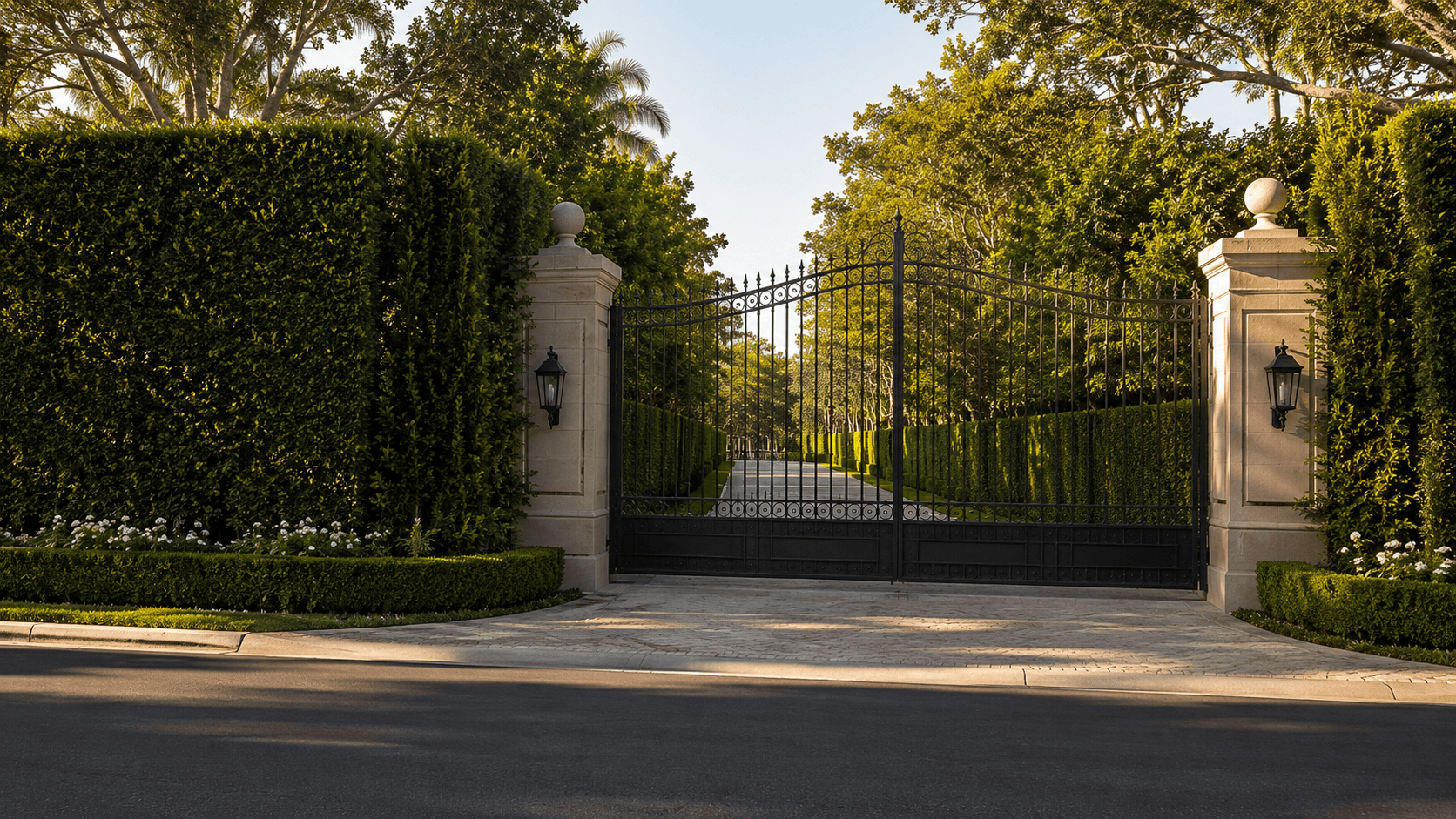
Gates limit access.
Pastures and landscaping create natural separation from neighboring properties.
For public figures and wealthy families, a large equestrian property can offer the type of seclusion that is increasingly difficult to find in conventional luxury neighborhoods.
Owners can ride, entertain, exercise and spend time outdoors without leaving their property.
Children can grow up around animals and open land.
Guests can stay in separate residences.
And because many of these properties are large enough to support significant private infrastructure, the estate can operate almost independently.
The horse may bring the buyer to the property.
The privacy can become another reason to stay.
Equestrian Estates Are Emotional Assets
Few forms of real estate create the same emotional connection as horse property.
For serious equestrians, horses aren't simply a hobby.
Their daily lives revolve around them.
Morning feeding.
Training.
Competition.
Veterinary care.
Travel.
Breeding.
The relationship can span decades.
Owning an estate allows the homeowner to control virtually every aspect of that environment.
Sotheby's once described this appeal through the idea of "completeness"—the ability to have the rider, horse, training environment and home integrated into one place.
That emotional component distinguishes equestrian property from many other luxury assets.
A penthouse can be sold and replaced.
A farm where a family raised horses for twenty years can become part of the family's identity.
Are Equestrian Estates Good Investments?
Potentially—but they require a different investment framework from conventional luxury homes.
An exceptional equestrian property can benefit from genuine scarcity.
Large contiguous parcels near important competition venues are difficult to reproduce.
Established barns and arenas can require substantial capital to construct.
Zoning may limit where horses can legally be kept.
And established equestrian communities possess networks of trainers, veterinarians, farriers and other professionals that can take decades to develop.
But specialized properties also have specialized buyer pools.
A 20-stall barn is enormously valuable to someone who needs 20 stalls.
To a buyer with no interest in horses, it may simply represent an expensive building to maintain.
That can affect liquidity.
The strongest equestrian investments therefore tend to combine specialized horse infrastructure with characteristics attractive to a broader luxury buyer:
Exceptional land.
Privacy.
A desirable primary residence.
Good access.
Strong surrounding communities.
And locations within established equestrian markets.
Wellington Demonstrates Both the Opportunity and the Risk
Recent activity in Wellington illustrates the complexity of the market.
After significant post-pandemic appreciation, transaction volume in the equestrian land market slowed. One 2026 analysis reported only 28 Wellington equestrian land transactions during the 12 months ending September 2025, even as prices remained elevated.
At the same time, questions around future development have created debate within the community about preserving Wellington's equestrian character.
This highlights an important lesson for anyone investing in equestrian real estate.
The surrounding ecosystem matters.
An estate's value isn't determined only by its house, barn and acreage.
It can depend on the continued strength of the horse community around it.
The Infrastructure Beyond the Property Matters
One of the easiest mistakes to make when buying equestrian real estate is focusing exclusively on the estate itself.
Serious buyers also need to evaluate what exists outside the gates.
How close is the nearest equine veterinarian?
Are emergency veterinary services available?
Where are the farriers?
How far must feed travel?
Can large horse trailers easily access the property?
Where are the competitions?
Are there nearby trails?
Can horses safely move between the property and surrounding facilities?
Is the local government supportive of equestrian land use?
These questions may matter far more than whether the kitchen has imported marble.
This is why established equestrian destinations maintain such powerful advantages.
The infrastructure already exists.
What Buyers Should Look for in an Equestrian Estate
Purchasing a high-end horse property requires a different due-diligence process from buying a conventional residence.
Buyers should evaluate:
Land and Soil
Is the acreage suitable for turnout, grazing and riding? How well does it drain?
Water
Does the property have sufficient and reliable water for horses, irrigation and maintenance?
Barn Quality
Consider ventilation, stall dimensions, drainage, storage, lighting and overall condition.
Arena Footing
Replacing or correcting poor footing can be expensive and directly affects the horses' health and performance.
Fencing
Horse-safe fencing is essential and can represent a substantial replacement cost across large acreage.
Zoning
Confirm the number of horses permitted and whether training, boarding, breeding or commercial activities are allowed.
Staff Housing
Professional equestrian operations may require trainers, grooms or property managers to live on-site.
Veterinary Access
Proximity to high-quality equine medical care can be critical.
Competition Access
For professional riders, minutes can matter. Being close to—or directly connected with—a major venue can create significant value.
Future Development
What surrounds the property today may not surround it in twenty years. Buyers should understand zoning and potential development nearby.
The House Is Only Half the Property
This may be the defining characteristic of equestrian luxury real estate.
In most luxury transactions, the home itself receives the majority of attention.
In the equestrian world, an extraordinary residence can sit on an inadequate horse property—and serious buyers may walk away.
Conversely, exceptional equestrian infrastructure on beautiful land can attract substantial interest even when the main residence isn't the most impressive home in the market.
The property has to work.
Horses impose practical requirements that architecture alone cannot solve.
And that functionality is part of what makes the best estates so valuable.
A Luxury Market Built Around a Lifestyle
The market for equestrian estates sits at an unusual intersection.
It is real estate.
It is agriculture.
It is sport.
It is business.
And for many owners, it is deeply personal.
That makes these properties some of the most complex—and fascinating—assets in luxury real estate.
The finest examples aren't simply mansions surrounded by picturesque white fencing.
They are carefully engineered environments where exceptional homes coexist with professional-level facilities, significant land and the infrastructure required to care for some of the world's most valuable animals.
For the right buyer, there are few greater luxuries.
Wake up.
Walk outside.
Enter the barn.
And have everything required to pursue one of the world's oldest sporting traditions waiting just beyond your front door.
Frequently Asked Questions About Equestrian Estates
What is an equestrian estate?
An equestrian estate is a property specifically designed to accommodate horses and their owners. Luxury equestrian estates typically combine a high-end residence with barns, stalls, paddocks, riding arenas, tack and feed rooms, horse-care facilities and significant acreage.
Where are the best places to buy equestrian real estate in the United States?
Some of America's best-known equestrian markets include Wellington and Ocala in Florida, Lexington and surrounding Kentucky horse country, and several California markets including the Santa Ynez Valley. The best location depends heavily on the buyer's riding discipline, competition schedule, acreage requirements and lifestyle.
Why is Wellington, Florida famous for horses?
Wellington is one of the world's leading centers for show jumping, dressage and polo and hosts major winter competitions that attract elite riders, owners and horses internationally. Its concentration of competition venues and supporting equestrian infrastructure has also created a highly specialized luxury property market.
Is Wellington or Ocala better for equestrian property?
Neither is universally better. Wellington is particularly attractive to buyers focused on its prestigious winter competition circuit and proximity to Palm Beach, while Ocala generally provides more acreage options, a broader year-round horse economy and access to the World Equestrian Center.
What features do luxury equestrian buyers look for?
Common priorities include quality barns, large stalls, turnout paddocks, professional riding arenas, appropriate footing, tack and feed rooms, staff housing, trailer access, strong fencing, reliable water and proximity to veterinary care and competition venues.
How much land do you need for an equestrian estate?
There is no universal acreage requirement. The appropriate amount depends on the number of horses, pasture quality, local zoning, riding discipline and whether the property is intended for private use, training, boarding or breeding. A thoughtfully designed smaller farm can sometimes function better than a poorly laid-out property with considerably more acreage.
Why are equestrian estates so expensive?
High-end equestrian estates combine valuable land with expensive specialized infrastructure. Barns, arenas, fencing, irrigation, staff accommodations and professional horse facilities can require significant investment, while properties near major equestrian venues may command additional premiums because suitable land is limited.
Are horse farms good investments?
They can be, particularly when they combine desirable land, strong infrastructure and a location within an established equestrian market. However, horse properties can have substantial operating costs and smaller buyer pools than conventional luxury homes, making careful due diligence important.
What is the difference between a horse farm and an equestrian estate?
A horse farm primarily describes property equipped for keeping or operating with horses. An equestrian estate generally implies a higher-end property that combines substantial horse facilities with luxury residential accommodations, landscaping, privacy and lifestyle amenities.
What should buyers inspect before purchasing a horse property?
Beyond a conventional home inspection, buyers should investigate fencing, barns, arena footing, drainage, soil, water, pasture condition, zoning, permitted horse counts, septic and well systems, trailer access, environmental restrictions and nearby development. Specialists familiar with equestrian properties can be valuable during this process.
Why do wealthy buyers purchase equestrian estates?
For serious riders and horse-owning families, an equestrian estate combines luxury living with immediate access to horses, training facilities and outdoor space. These properties can also provide significant privacy, acreage and a multigenerational lifestyle difficult to replicate in conventional luxury communities.
FROM THE EDITORIAL
Lifestyle
Why Privacy Is Becoming the Ultimate Luxury Amenity
As technology makes the world more connected and personal lives more visible, the ability to retreat into a truly private home is becoming one of the most valuable luxuries money can buy.
·
6 Min

Lifestyle
The Rise of the Branded Residence: Why Luxury Buyers Are Paying a Premium
From five-star hospitality names to fashion houses and automotive icons, branded residences are transforming luxury real estate—and redefining what affluent buyers expect from a home.
·
7 Min

Investments
Where the Wealthy Are Finding the Best Real Estate Investments in 2026
From scarce waterfront estates and fast-growing luxury markets to multifamily housing and the infrastructure powering artificial intelligence, today’s most compelling real estate opportunities extend far beyond the traditional trophy home.
·
6 Min
THE PRESTIGE REPORT NEWSLETTER
SUBSCRIBE TO THE NEWSLETTER