Lifestyle
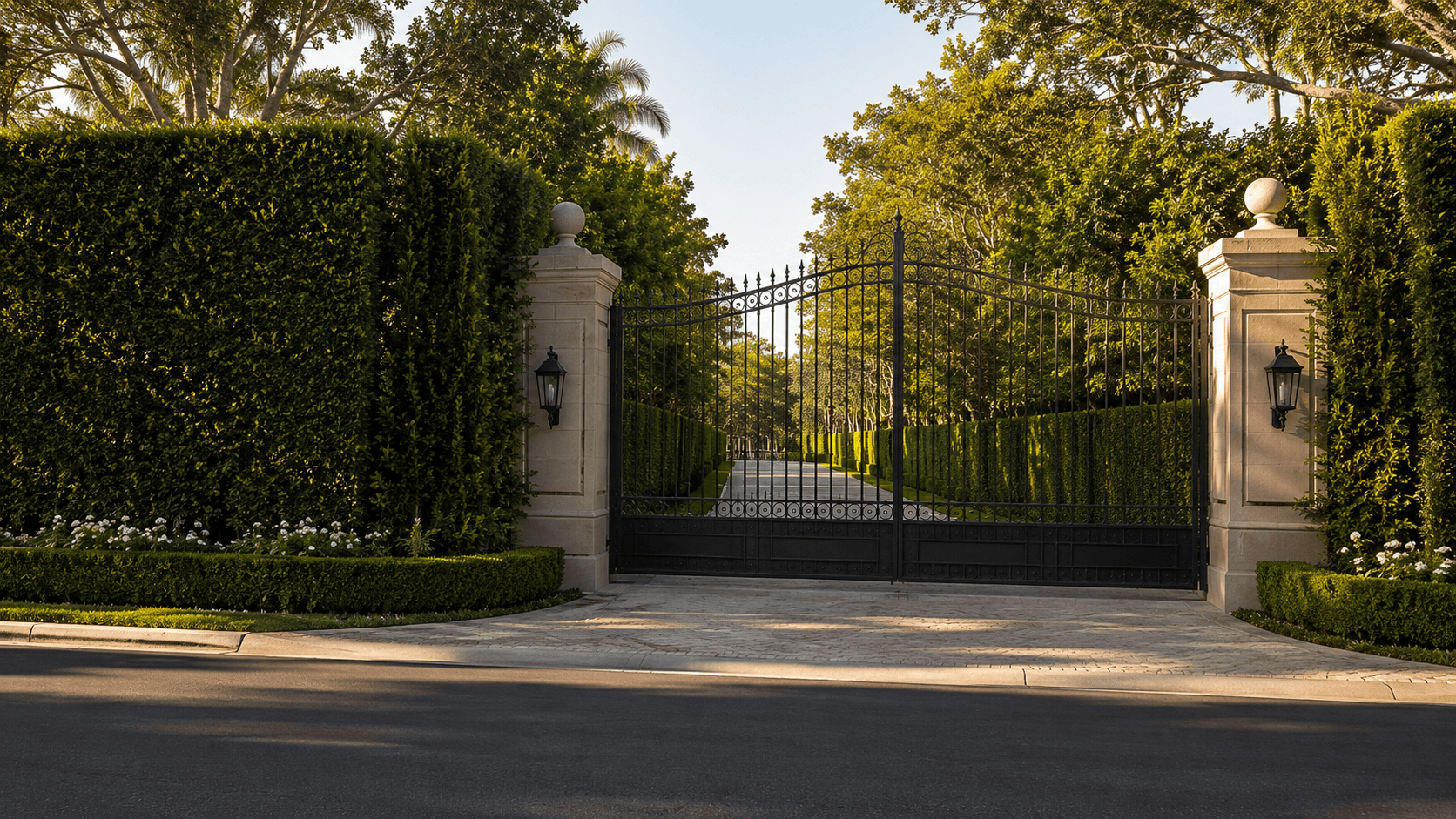
For decades, luxury real estate was largely defined by what could be seen.
Grand entrances. Expansive estates. Sweeping views. Impressive architecture. Resort-style swimming pools and interiors designed to make an immediate statement.
Today, one of the most valuable features in ultra-luxury real estate is something deliberately designed not to be seen.
Privacy.
For the world's wealthiest buyers, the ability to retreat from public life has become increasingly valuable. As technology makes people more accessible, social media makes personal lives more visible and information about homes becomes easier to find, privacy has evolved from a preference into an important component of luxury.
The shift can be seen throughout the country's most prestigious real estate markets.
Buyers are seeking larger parcels, gated entrances, private islands, controlled-access communities, significant setbacks, sophisticated security systems and properties where neighboring homes are barely visible.
In some cases, privacy itself may be one of the characteristics commanding the greatest premium.
Because in an increasingly connected world, true seclusion is becoming extraordinarily difficult to replicate.
The Definition of Luxury Is Changing
The traditional definition of a luxury home often centered on size and materials.
More square footage meant more luxury.
Imported marble meant more luxury.
A larger swimming pool, more bedrooms and grander entertaining spaces all reinforced the perception of wealth.
Those features still matter, but affluent buyers are increasingly evaluating homes based on the experience they provide.
Does the property make life easier?
Does it offer security?
Can the owner relax without being observed?
Can children play outside without concern?
Can guests arrive discreetly?
Can someone spend an entire weekend at home without feeling exposed to the outside world?
These questions have become increasingly important at the highest end of the market.
The result is a shift from visible luxury toward experiential luxury.
And few experiences are more valuable than being able to completely disconnect.
Why Privacy Has Become More Valuable
We live in perhaps the most connected period in history.
Phones reveal locations.
Social media documents travel.
Property records can be searched online.
Satellite imagery makes homes visible from above.
Real estate listings can provide thousands of photographs of interiors that would once have remained completely private.
And high-profile individuals can have aspects of their lives documented almost constantly.
For celebrities, athletes, executives, founders and other prominent individuals, home may be one of the few places where that visibility can disappear.
That changes the role of a luxury residence.
The property isn't simply somewhere beautiful to live.
It becomes a refuge from the outside world.
And the more public someone's life becomes, the more valuable that refuge can be.
Land Is Becoming the Ultimate Privacy Feature
One of the simplest ways to create privacy is also one of the most expensive:
own more land.
A large estate allows architects and landscape designers to create distance between the residence and everything surrounding it.
Long driveways separate homes from public roads.
Mature trees and hedges create natural barriers.
Large setbacks make neighboring residences disappear.
Gardens, guest houses and recreational facilities can be positioned throughout the property without compromising the privacy of the main residence.
This helps explain why acreage can carry extraordinary value in markets where large parcels are increasingly difficult to assemble.
A beautifully renovated interior can be reproduced.
Ten private acres in the right location often cannot.
For wealthy buyers thinking about long-term value, that distinction matters.
Private Islands Take Privacy to Its Extreme
Few forms of residential real estate embody privacy quite like the private island.
Water creates a natural barrier that even the tallest hedge cannot replicate.
That helps explain the extraordinary prestige associated with island communities in markets such as Miami.
Indian Creek Island has become one of America's most famous examples. The small residential island is known for its extremely limited number of homes, waterfront estates, controlled access and extraordinary concentration of wealthy residents.
The attraction isn't simply owning an expensive house.
It is the environment surrounding it.
Limited access means fewer people passing through. Waterfront lots create separation. Security can be managed at a community level, while individual estates can maintain their own layers of protection.
For ultra-high-net-worth buyers, this combination of scarcity and privacy can be extremely difficult to reproduce elsewhere.
Gated Communities Are Becoming More Sophisticated
The gated community has existed for decades, but at the highest level, controlled-access living has become increasingly sophisticated.
Luxury buyers may seek communities offering:
Guarded entrances
Limited vehicle access
Private roads
Community security patrols
Controlled visitor access
Significant separation between residences
Private amenities reserved for residents
The appeal is partly security.
But it is also control.
A private community limits the number of people moving through a residential environment and creates a degree of separation from surrounding public areas.
This can be especially valuable in resort destinations, where popular beaches, restaurants and entertainment districts may attract significant seasonal traffic.
Residents can remain close to everything they want while still retreating into a controlled environment when they return home.
The Return of the Private Compound
Another increasingly desirable form of luxury property is the private compound.
Instead of placing every function beneath one roof, large estates can distribute them across multiple buildings.
A compound might include:
A primary residence
Guest houses
Staff accommodations
A wellness pavilion
Pool house
Private office
Security facilities
Entertainment building
Garages
Recreational facilities
This arrangement creates an unusual combination of togetherness and separation.
Extended family can stay on the property without living inside the main residence.
Guests can have their own accommodations.
Staff can operate discreetly.
Owners can work, exercise, entertain and relax in different areas without leaving the estate.
For wealthy families, the property begins to function less like a house and more like a self-contained private world.
Landscaping Is Becoming Architecture
Privacy doesn't always require walls.
Some of the most sophisticated luxury estates use landscaping to create separation naturally.
Mature trees, dense hedging, carefully positioned gardens, elevation changes and strategic landscape architecture can prevent sightlines into a property without making the home feel enclosed.
This approach is particularly visible in established luxury markets such as the Hamptons.
Tall hedges have become almost synonymous with Hamptons estates, creating remarkable privacy even when homes sit relatively close to roads or neighboring properties.
The effect is subtle.
From the street, little may be visible beyond a gate and carefully maintained greenery.
Behind it may sit a substantial estate, swimming pool, tennis court and several acres of private grounds.
That discretion has become part of the area's luxury identity.
Security Is Becoming Invisible
Privacy and security are closely connected, but modern luxury buyers increasingly want security without the feeling of living inside a fortress.
The most sophisticated residential security systems are therefore becoming less visible.
Technology can include perimeter detection, advanced cameras, controlled access, biometric authentication, safe rooms and centralized monitoring without dramatically altering the appearance of the residence.
The Wall Street Journal reported in 2026 on increased spending by ultrawealthy homeowners on residential security, including properties incorporating AI-enabled surveillance, perimeter systems and reinforced safe rooms.
The important development isn't simply that security technology is improving.
It is that it can increasingly disappear into the architecture.
A resident can enjoy open glass walls, gardens and expansive outdoor areas while sophisticated systems operate quietly in the background.
At the highest level, security should provide peace of mind without constantly reminding the owner that it exists.
Private Amenities Reduce the Need to Leave Home
Privacy is also helping drive another major luxury real estate trend: the private resort.
If an owner values discretion, one of the easiest ways to maintain it is to bring traditionally public experiences home.
Instead of visiting a gym, build one.
Instead of visiting a spa, create a wellness suite.
Instead of joining a crowded beach club, own private beach frontage.
Instead of visiting a theater, create a cinema.
Instead of going to a restaurant for every important dinner, build a chef's kitchen and entertaining pavilion.
Today's exceptional estates can include:
Private gyms
Spas
Saunas
Cold plunges
Massage rooms
Tennis and pickleball courts
Golf simulators
Movie theaters
Wine rooms
Restaurants or commercial-grade kitchens
Salons
Private offices
Beach access
Boat docks
These amenities are usually discussed as conveniences.
But they also serve another purpose.
They allow homeowners to experience more of life without sacrificing privacy.
Waterfront Property Creates Natural Separation
Waterfront real estate has always commanded premiums for views and lifestyle.
But waterfront property can also provide something increasingly valuable: fewer neighbors.
An oceanfront estate may have the Atlantic on one side.
A property at the end of a peninsula may have water surrounding several sides.
An island estate can have water separating it from nearly everything else.
This natural separation creates both visual privacy and physical scarcity.
It's one reason exceptional waterfront land remains so valuable in places such as Miami, Palm Beach and the Hamptons.
The view may attract the buyer initially.
The privacy may be what makes them never want to leave.
Privacy Is Influencing Architecture
Architects designing ultra-luxury homes increasingly have to solve an interesting contradiction.
Owners want enormous windows and natural light.
But they don't necessarily want anyone looking through them.
They want outdoor living.
But they don't want to feel exposed.
They want dramatic architecture.
But they may not want the entire residence visible from the street.
This is changing the way homes are designed.
Courtyards can orient living spaces inward.
Landscape walls can shield glass rooms.
Bedrooms can face private gardens rather than neighboring homes.
Motor courts can be positioned away from primary entertaining areas.
Service entrances can separate staff and deliveries from the owner's arrival.
Pools can be placed where they are invisible from surrounding roads.
Architecture becomes not simply about creating beautiful spaces, but controlling who can see those spaces and from where.
The Value of a Discreet Address
Interestingly, privacy can also influence where affluent buyers choose to live.
The most recognizable address isn't always the most desirable one.
Some buyers want Beverly Hills.
Others would prefer a secluded property hidden in the surrounding hills.
Some want a Manhattan penthouse overlooking Central Park.
Others may prioritize a building known for exceptional security and discreet entrances.
Some want to be directly in the center of Miami Beach.
Others prefer a guarded island minutes away.
This creates a unique segment of luxury real estate where discretion itself becomes part of the property's identity.
The ultimate status symbol may increasingly be the house almost nobody gets to see.
Off-Market Real Estate Is Part of the Privacy Economy
Privacy doesn't begin after someone buys a home.
For many luxury sellers, it begins during the transaction.
Some high-end homeowners do not want photographs of their residences distributed across listing portals and social media.
They don't want their possessions visible online.
They don't want the public knowing they're selling.
And they may not want unqualified buyers touring their homes.
That creates an important role for private and off-market luxury real estate transactions.
Instead of broad public marketing, an agent may quietly introduce a property to a limited network of qualified buyers and other luxury advisors.
In certain cases, buyers themselves may also prefer discretion.
This is one reason relationships remain so important at the highest levels of real estate.
Some of the most desirable properties aren't necessarily the easiest ones to find online.
Privacy Can Create Scarcity—and Scarcity Creates Value
From an investment perspective, privacy has an interesting characteristic:
It is difficult to add later.
A kitchen can be remodeled.
Bathrooms can be renovated.
Technology can be upgraded.
A pool can sometimes be added.
But changing the fundamental privacy of a property can be extremely difficult.
You cannot easily move a neighboring house.
You cannot create ten additional acres.
You cannot turn an ordinary street into a guarded island.
You cannot relocate a property from a busy road to the end of a private peninsula.
That means privacy can function similarly to other forms of real estate scarcity.
The characteristics built into the land and location itself may become more valuable precisely because they cannot be reproduced.
What Luxury Buyers Should Look for
Buyers seeking privacy should look beyond whether a property simply has a gate.
True residential privacy is created through layers.
Consider:
Approach: Can the home be seen from the public road?
Setback: How far is the residence from neighboring properties?
Sightlines: Can nearby homes see into pools, bedrooms or outdoor spaces?
Access: Is the street public, private or guarded?
Land: Is there enough acreage to create meaningful separation?
Landscaping: Can vegetation create natural screening?
Security: Can sophisticated protection be integrated discreetly?
Water: Does waterfront positioning naturally limit exposure?
Airspace and surroundings: Could future construction compromise existing privacy?
Daily operations: Can deliveries, staff and guests enter without disrupting the owner's private areas?
A truly private property is not created by one feature.
It is created by the way all of these elements work together.
Privacy May Be the Luxury That Matters Most
The luxury real estate market has always evolved alongside the priorities of the wealthy.
There was an era when enormous formal entertaining spaces symbolized status.
Then came elaborate home theaters, wine cellars and resort-style pools.
Today, wellness, convenience and technology are transforming high-end residential design.
But privacy sits above many of these trends.
Because the more connected the world becomes, the more valuable it is to have somewhere that isn't.
A home where the gate closes.
The phone goes away.
The cameras belong to you.
The outside world disappears behind the landscape.
And for a few hours—or a few months—you can simply be left alone.
For the ultra-wealthy, that may increasingly represent the purest definition of luxury.
Not having something everyone else wants to see.
But having somewhere no one else can.
Frequently Asked Questions About Privacy in Luxury Real Estate
Why is privacy becoming important in luxury real estate?
Affluent buyers are increasingly exposed to social media, digital information, public records and greater visibility in their professional and personal lives. A private residence provides separation from that environment, making seclusion, security and controlled access increasingly desirable luxury features.
What makes a luxury home truly private?
The most private luxury homes typically combine several features, including significant setbacks, large parcels, controlled access, landscaping, limited sightlines, sophisticated security and locations that naturally restrict public access.
Do private homes sell for more?
Privacy can contribute to a property's value, particularly in ultra-luxury markets where large parcels, private roads, waterfront positions and controlled-access communities are scarce. However, value still depends on the overall property, location and market.
What are the best types of properties for privacy?
Large estates, gated compounds, private-island homes, expansive ranches, penthouses with controlled access and waterfront properties with limited neighboring exposure can offer particularly high levels of privacy.
Why do wealthy people buy homes on private islands?
Private islands and island communities naturally restrict access while providing waterfront views, limited inventory and physical separation from surrounding neighborhoods. This combination can be particularly attractive to high-profile and ultra-high-net-worth buyers.
Why are large lots valuable in luxury real estate?
Large parcels provide more than additional space. They allow owners to create greater setbacks, landscaping buffers, guest accommodations and recreational amenities while maintaining separation from neighbors and public roads.
Are gated communities more private?
They can be. Guarded entrances, private roads and controlled visitor access can limit public traffic and provide an additional layer of security. The actual level of privacy varies significantly between communities.
How do luxury homes provide security without looking like fortresses?
Modern residential security can be integrated into architecture and landscaping through discreet cameras, perimeter detection, controlled entrances, biometric systems, safe rooms and centralized monitoring. This allows sophisticated protection without dominating the home's design.
Why are off-market luxury homes common?
Some luxury homeowners prefer not to publicly advertise their properties because of privacy, security or confidentiality concerns. Instead, properties may be marketed privately through networks of luxury agents and qualified buyers.
What luxury markets are known for privacy?
Markets such as the Hamptons, Palm Beach, Miami, Beverly Hills, Aspen and Jackson Hole all contain highly private luxury enclaves. However, privacy can vary dramatically within each market depending on acreage, neighborhood design, access and individual property characteristics.
Is privacy a good feature for long-term property value?
Potentially. Privacy can be particularly valuable when it comes from characteristics that cannot easily be reproduced, such as acreage, waterfront positioning, private roads or controlled-access locations. Unlike interior finishes, these characteristics can be difficult or impossible to add later.
FROM THE EDITORIAL

Lifestyle
Inside the Market for Equestrian Estates
Part luxury residence, part working farm and part private sporting retreat, the finest equestrian estates represent one of the most specialized corners of high-end real estate.
·
7 Min

Lifestyle
The Rise of the Branded Residence: Why Luxury Buyers Are Paying a Premium
From five-star hospitality names to fashion houses and automotive icons, branded residences are transforming luxury real estate—and redefining what affluent buyers expect from a home.
·
7 Min

Investments
Where the Wealthy Are Finding the Best Real Estate Investments in 2026
From scarce waterfront estates and fast-growing luxury markets to multifamily housing and the infrastructure powering artificial intelligence, today’s most compelling real estate opportunities extend far beyond the traditional trophy home.
·
6 Min
THE PRESTIGE REPORT NEWSLETTER
SUBSCRIBE TO THE NEWSLETTER