Markets & Reports

Today, the Hamptons are almost inseparable from the idea of American luxury.
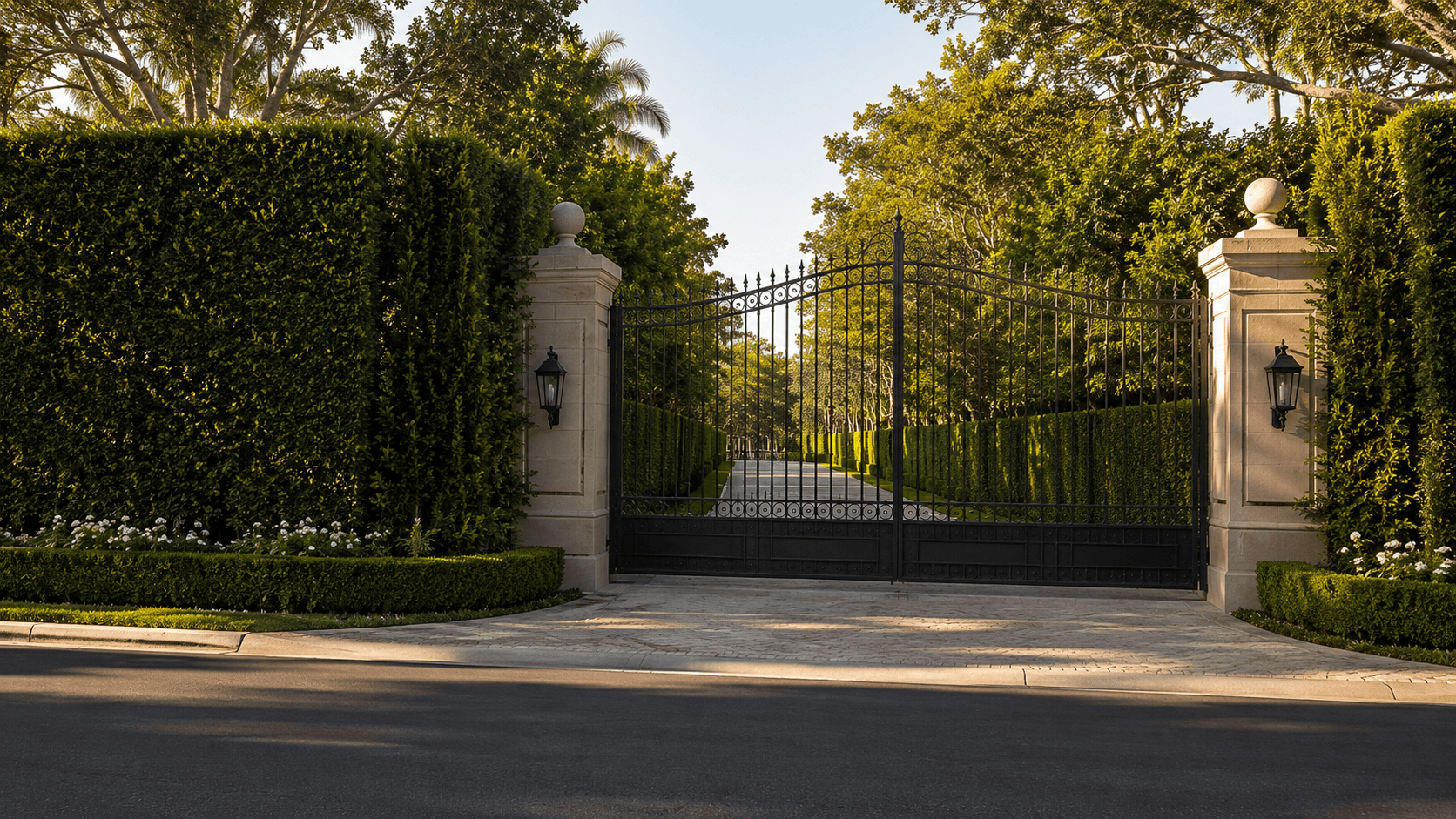
Oceanfront estates disappear behind manicured hedges. Private clubs sit beside some of the country’s most valuable residential streets. Manhattan financiers, entrepreneurs, entertainers and multigenerational families return summer after summer to a collection of villages along the eastern end of Long Island.
In 2026, homes worth tens of millions of dollars routinely trade throughout the region, while exceptional oceanfront estates can push dramatically higher. The Hamptons’ luxury market has become so established that even periods of broader economic uncertainty have done little to erase its status as one of America’s premier destinations for high-end real estate.
But the Hamptons were not created as a luxury enclave.
Long before Southampton, East Hampton, Sagaponack and Bridgehampton became synonymous with extraordinary wealth, this part of Long Island was shaped by agriculture, fishing and maritime commerce.
The transformation that followed offers a remarkable example of how geography, infrastructure, culture and scarcity can turn a collection of coastal communities into one of the most valuable real estate markets in the world.
Before the Mansions, There Were Farms and Fishing Villages
The history of the Hamptons stretches back centuries.
European settlement in Southampton began in the 17th century, while East Hampton was laid out in 1648. For generations, the economy revolved largely around farming, fishing and maritime activity rather than tourism or luxury real estate.
Much of the land that now commands extraordinary prices was valued primarily for its agricultural usefulness.
Ironically, some of the oceanfront land that later became among the most desirable property in America was considerably less valuable to farmers than fertile inland acreage.
The Atlantic Ocean was beautiful, but beauty alone did not yet create a luxury real estate market.
That would begin changing in the late 19th century.
The Railroad Changed Everything
One of the most important forces behind the transformation of the Hamptons was access.
As rail transportation expanded across Long Island during the second half of the 19th century, wealthy New Yorkers gained a practical way to escape the heat and density of Manhattan for the summer.
Suddenly, the eastern end of Long Island was no longer a remote agricultural region.
It was a seaside retreat accessible from America's largest and wealthiest city.
By the 1870s, Southampton was beginning to attract its earliest summer residents. Historical accounts place one of Southampton's first purpose-built summer cottages around 1875.
The timing was significant.
America was entering the Gilded Age—a period of extraordinary industrial expansion and the creation of enormous private fortunes.
And some of that wealth began heading east.
The Gilded Age Arrives in Southampton
As wealthy New York families discovered the South Fork, modest summer cottages quickly gave way to increasingly elaborate estates.
Southampton became one of the earliest centers of this new summer society.
Large homes appeared near the ocean, surrounded by expansive lawns, gardens and private grounds. Tennis, social clubs, entertaining and a seasonal calendar began developing around the families who returned each year.
By the late 19th and early 20th centuries, Southampton had established itself as a true summer colony for members of New York society.
The foundation of the modern Hamptons had been created.
The region offered exactly what affluent New Yorkers wanted: proximity to Manhattan without feeling like Manhattan.
There was open land.
There were beaches.
There was privacy.
And perhaps most importantly, there was a growing social network of other wealthy families.
Luxury destinations often become more desirable because of the people already there.
The Hamptons were beginning to experience that effect more than a century ago.
The Beginning of “Old Money” Hamptons
Over time, certain streets, clubs and communities developed reputations that extended well beyond the value of the individual homes located there.
Southampton's Gin Lane and Meadow Lane became associated with extraordinary estates and generational wealth.
East Hampton developed its own elite residential enclaves, including properties surrounding Further Lane, Lily Pond Lane and the Maidstone Club.
These addresses gradually accumulated something that cannot be built quickly: prestige.
A home was no longer valuable simply because it was large or near the ocean.
Its location carried social and historical significance.
That distinction remains fundamental to luxury real estate today.
Two equally beautiful estates can command dramatically different values when one sits on a street that has represented wealth and exclusivity for generations.
The Hamptons became particularly effective at producing this kind of location-based prestige.
Artists Gave the Hamptons Another Identity
Wealth wasn't the only force shaping the Hamptons.
During the 20th century, the East End also developed into one of America's most important artistic communities.
The landscape, unusual coastal light and relative isolation attracted generations of artists. East Hampton became associated with figures including Jackson Pollock, Lee Krasner, Willem de Kooning and other major members of the American art world. The East Hampton Historical Society describes the area as having developed into one of America's preeminent artists' colonies.
This introduced a different form of cultural prestige.
The Hamptons weren't simply wealthy.
They became creative.
Writers, painters, photographers, designers and other cultural figures mixed with established families and New York society.
That combination of money and culture helped distinguish the region from conventional resort communities.
It created a mythology around the Hamptons that extended far beyond real estate.
From Old Money to Celebrity Culture
By the second half of the 20th century, the Hamptons had become increasingly visible in American popular culture.
Artists were joined by entertainers, fashion figures, media personalities and executives.
The area's proximity to New York continued to work in its favor. Wealthy residents could maintain professional lives in Manhattan while spending weekends and summers near the ocean.
At the same time, the Hamptons offered something increasingly difficult to find near a major global city: space.
Behind tall hedges and long driveways, prominent residents could own significant acreage and enjoy considerable privacy while remaining within reach of New York.
As celebrity culture expanded, the Hamptons increasingly became associated with the famous as well as the wealthy.
Its reputation became self-reinforcing.
Prestigious buyers attracted more prestigious buyers.
And limited inventory ensured that demand increasingly collided with scarcity.
Wall Street Changed the Scale of the Market
The enormous growth of the financial industry in New York introduced another transformation.
Investment bankers, hedge fund founders, private equity executives and other financial professionals became an increasingly important part of the Hamptons buyer pool.
The connection between Wall Street and Hamptons real estate remains particularly strong.
Periods of substantial wealth creation in financial markets can translate into increased activity at the high end of the East End property market. Recent reporting on the 2026 market has again linked strong luxury activity to Wall Street wealth and bonuses.
This changed the economics of the region.
An estate that might once have been purchased by a wealthy family as a summer residence increasingly became a trophy asset coveted by buyers capable of spending tens of millions—or considerably more.
The millionaire summer colony gradually became a billionaire real estate market.
Scarcity Became the Hamptons’ Greatest Asset
Luxury real estate ultimately depends on something simple: what cannot easily be replicated.
And the Hamptons have an extraordinary amount of it.
There is only so much oceanfront land.
There are only so many large parcels south of the highway.
There are only so many historic estates along streets like Gin Lane, Meadow Lane and Further Lane.
Development restrictions, established neighborhoods and the geography of Long Island make creating new prime waterfront inventory inherently difficult.
That scarcity has become one of the primary forces supporting the highest end of the Hamptons market.
A spectacular new home can be constructed in many places.
Another five-acre oceanfront parcel in Southampton cannot simply be manufactured.
For ultra-high-net-worth buyers, that difference matters.
“South of the Highway” Becomes a Luxury Real Estate Language
Over time, the Hamptons developed its own vocabulary of value.
Perhaps the most famous phrase is “south of the highway.”
In many Hamptons communities, property south of Montauk Highway places homeowners closer to the Atlantic Ocean and within some of the region's most prestigious residential areas.
The phrase evolved into something more than a geographic description.
It became shorthand for status.
Similarly, buyers distinguish between oceanfront, bayfront, village, farm-field views and locations within walking distance of town.
Every micro-market has its own hierarchy.
This is one reason Hamptons luxury real estate can be difficult to understand from listing prices alone.
Location can change value dramatically within a relatively short distance.
The Hamptons Become a Collection of Luxury Micro-Markets
One of the misconceptions about Hamptons real estate is that the area represents a single market.
It doesn't.
Southampton offers a different experience from East Hampton.
Bridgehampton differs from Sag Harbor.
Sagaponack is different from Montauk.
Amagansett attracts another type of buyer entirely.
Each community has developed its own architecture, lifestyle, reputation and pricing.
Southampton is closely associated with grand estates, established social institutions and some of the region's most prestigious oceanfront addresses.
East Hampton combines historic village character with extraordinary estates, beaches, art and longstanding cultural cachet.
Sagaponack is known for its open farmland, extreme privacy and extraordinary oceanfront properties.
Bridgehampton combines equestrian culture, farmland, estates and convenient access between Southampton and East Hampton.
Sag Harbor offers a historic waterfront village atmosphere with shops, restaurants and a strong maritime identity.
Amagansett blends understated luxury with beaches, dunes and a slightly more relaxed character.
Montauk, once considered the more distant and casual end of the South Fork, has increasingly attracted luxury development and affluent buyers while retaining elements of its surf-town identity.
Together, these communities give affluent buyers something unusual: multiple versions of luxury within one relatively small geographic region.
The Pandemic Accelerated an Existing Shift
The Hamptons had been an elite market for generations before 2020, but the pandemic altered the way many owners used their properties.
Second homes became primary residences.
Weekend houses became places where owners could work for months at a time.
Demand for space, privacy, pools, home offices and outdoor living intensified.
That period contributed to a significant repricing of Hamptons real estate. The Financial Times reported in 2026 that local prices had risen approximately 60% since 2020 as low inventory, changing lifestyle patterns and affluent demand reshaped the market.
The psychological shift may have been just as important as the financial one.
For many buyers, the Hamptons stopped being somewhere to live for ten weekends each summer.
It became somewhere they could genuinely live.
The Modern Ultra-Luxury Hamptons
Today, the Hamptons sit firmly within America's ultra-luxury real estate landscape.
Corcoran's first-quarter 2026 report found that the average price within the top 10% of the East End residential market reached approximately $14.98 million, while the luxury median climbed to approximately $11.75 million. The quarter included eight transactions above $20 million.
At the very highest level, values can move dramatically beyond those numbers.
Meadow Lane alone recorded more than $220 million in sales over roughly a five-mile stretch beginning in 2025, according to The Wall Street Journal. The publication also reported a sharp increase in $20 million-plus transactions as the high end of the market strengthened.
And extraordinary new estates continue testing the market's ceiling.
In August 2026, plans for a newly constructed East Hampton oceanfront estate designed by Robert A.M. Stern were marketed with an asking price of $162 million, illustrating just how high expectations have risen for irreplaceable Hamptons property.
Why the Hamptons Have Maintained Their Prestige
Plenty of destinations attract wealthy homeowners.
Far fewer maintain their status for more than a century.
The Hamptons benefit from an unusual combination of advantages.
They offer beautiful Atlantic beaches and significant privacy while remaining closely connected to New York City.
They have historic villages rather than purely master-planned luxury communities.
They possess generations of architecture and cultural history.
They have established restaurants, galleries, clubs and social institutions.
And most importantly, their most desirable real estate is genuinely scarce.
That scarcity protects one of the defining characteristics of luxury: not everyone can have it.
More Than Expensive Real Estate
The story of the Hamptons is ultimately about more than rising property values.
It is about how a destination develops identity.
Farming villages became summer colonies.
Summer colonies attracted industrial fortunes.
Wealth attracted clubs, architecture and social institutions.
Artists added cultural importance.
Celebrities added visibility.
Wall Street introduced another generation of capital.
And scarcity transformed prime land into trophy real estate.
Each generation layered something new onto the one before it.
That history is part of the reason a Hamptons property today can mean more than an equally impressive house somewhere else.
Buyers aren't simply purchasing bedrooms, acreage or ocean frontage.
They're buying into a place whose reputation has been building for more than a century.
The Enduring Appeal of the Hamptons
Luxury markets change.
New destinations emerge, tastes evolve and wealth moves around the world.
Yet the Hamptons have demonstrated an unusual ability to reinvent themselves while maintaining the qualities that made the region desirable in the first place.
The estates are larger.
The buyers are wealthier.
The architecture is more sophisticated.
And the prices have reached levels that earlier generations could scarcely have imagined.
But the underlying proposition remains remarkably similar to the one that attracted affluent New Yorkers in the late 1800s:
Leave the city behind.
Find space.
Reach the ocean.
And spend the summer somewhere that feels entirely removed from Manhattan—without ever being too far away.
That formula turned a collection of quiet Long Island communities into one of the most recognizable luxury real estate markets in the world.
More than a century later, it continues to work.
Frequently Asked Questions About Hamptons Luxury Real Estate
When did the Hamptons become a luxury destination?
The Hamptons began developing into an affluent summer destination during the late 19th century, when improved transportation made the East End of Long Island more accessible to wealthy New Yorkers. Southampton was already developing a summer colony during the 1870s and became closely associated with Gilded Age society in the decades that followed.
Why did wealthy New Yorkers start going to the Hamptons?
The Hamptons offered affluent New Yorkers beaches, open land, cooler summer conditions and privacy while remaining accessible from Manhattan. Improved railroad transportation made seasonal travel to the East End increasingly practical during the late 19th century.
Why is Hamptons real estate so expensive?
Hamptons luxury real estate combines limited supply with strong demand from affluent buyers. Oceanfront land, large parcels and prestigious historic locations are especially scarce, while proximity to New York City gives the region access to one of the world's largest concentrations of private wealth.
What are the most prestigious areas in the Hamptons?
Among the best-known luxury enclaves are Southampton, East Hampton, Sagaponack and Bridgehampton, with particularly prestigious streets and areas including Meadow Lane, Gin Lane and Further Lane. Sag Harbor, Amagansett and Montauk also have important high-end markets, although each offers a different lifestyle.
What does “south of the highway” mean in the Hamptons?
“South of the highway” generally refers to properties located south of Montauk Highway in portions of the Hamptons. Many of these neighborhoods are closer to the Atlantic Ocean and include some of the region's most prestigious residential streets, making the phrase a commonly used indicator of location within Hamptons real estate.
Is East Hampton or Southampton more expensive?
Both contain some of the most expensive real estate in the United States, and pricing depends heavily on the individual property. Ocean frontage, acreage, street, architectural quality and proximity to the villages can have a larger impact on value than simply whether a property is located in East Hampton or Southampton.
What is considered a luxury home in the Hamptons?
The definition changes by community and market conditions. At the institutional market-reporting level, luxury is often measured as the top 10% of sales. In Q1 2026, Corcoran reported that this segment of the East End market had a median sale price of approximately $11.75 million.
Are there still historic estates in the Hamptons?
Yes. The Hamptons retain examples of historic cottages and estates from their development as a summer colony, although many older properties have been expanded, renovated or replaced over the decades. Their history contributes to the architectural character of communities such as Southampton and East Hampton.
Why do celebrities and billionaires buy homes in the Hamptons?
The region provides a rare combination of proximity to New York City, extensive beaches, large private properties, established luxury amenities and a social environment that has attracted prominent residents for generations. Prime properties also offer a level of scarcity that appeals to trophy-real-estate buyers.
Is the Hamptons luxury market still strong in 2026?
The upper end of the market has remained highly active. In the first quarter of 2026, the East End's luxury median increased to approximately $11.75 million, while reporting later in the year pointed to strong activity in $10 million-plus and $20 million-plus properties.
FROM THE EDITORIAL

Lifestyle
Inside the Market for Equestrian Estates
Part luxury residence, part working farm and part private sporting retreat, the finest equestrian estates represent one of the most specialized corners of high-end real estate.
·
7 Min
Lifestyle
Why Privacy Is Becoming the Ultimate Luxury Amenity
As technology makes the world more connected and personal lives more visible, the ability to retreat into a truly private home is becoming one of the most valuable luxuries money can buy.
·
6 Min

Lifestyle
The Rise of the Branded Residence: Why Luxury Buyers Are Paying a Premium
From five-star hospitality names to fashion houses and automotive icons, branded residences are transforming luxury real estate—and redefining what affluent buyers expect from a home.
·
7 Min
THE PRESTIGE REPORT NEWSLETTER
SUBSCRIBE TO THE NEWSLETTER